More Repair Shops Are Starting to Care About Screen Stability Instead of Just Cheap Pricing
Something has changed quite a bit in the mobile phone screen business over the past two years.A few years ago, most repair shops mainly cared about one thing:
"How much does the screen cost?"
Now the conversations are different.
Especially for shops repairing large numbers of iPhones every week, the focus has slowly shifted toward:
- return rates
- touch stability
- batch consistency
- long-term screen performance
Because many repair stores have learned the hard way that buying the cheapest screen often becomes more expensive later.
And honestly, most problems in the aftermarket LCD and OLED industry don't appear on the first day.
That's what makes this business tricky.
A lot of replacement screens look perfectly fine during installation.
Brightness looks strong.
Touch works normally.
Colors seem acceptable.
Customers test the phone for two minutes and leave happy.
Then a week later the repair shop starts getting messages like:
- "The touch feels strange."
- "The screen flickers sometimes."
- "Brightness suddenly changed."
- "The phone gets hot during charging."
At that point, many customers assume the repair technician made a mistake.
But people who have worked in the mobile phone LCD industry for years usually know the issue often starts much earlier - inside the supply chain itself.
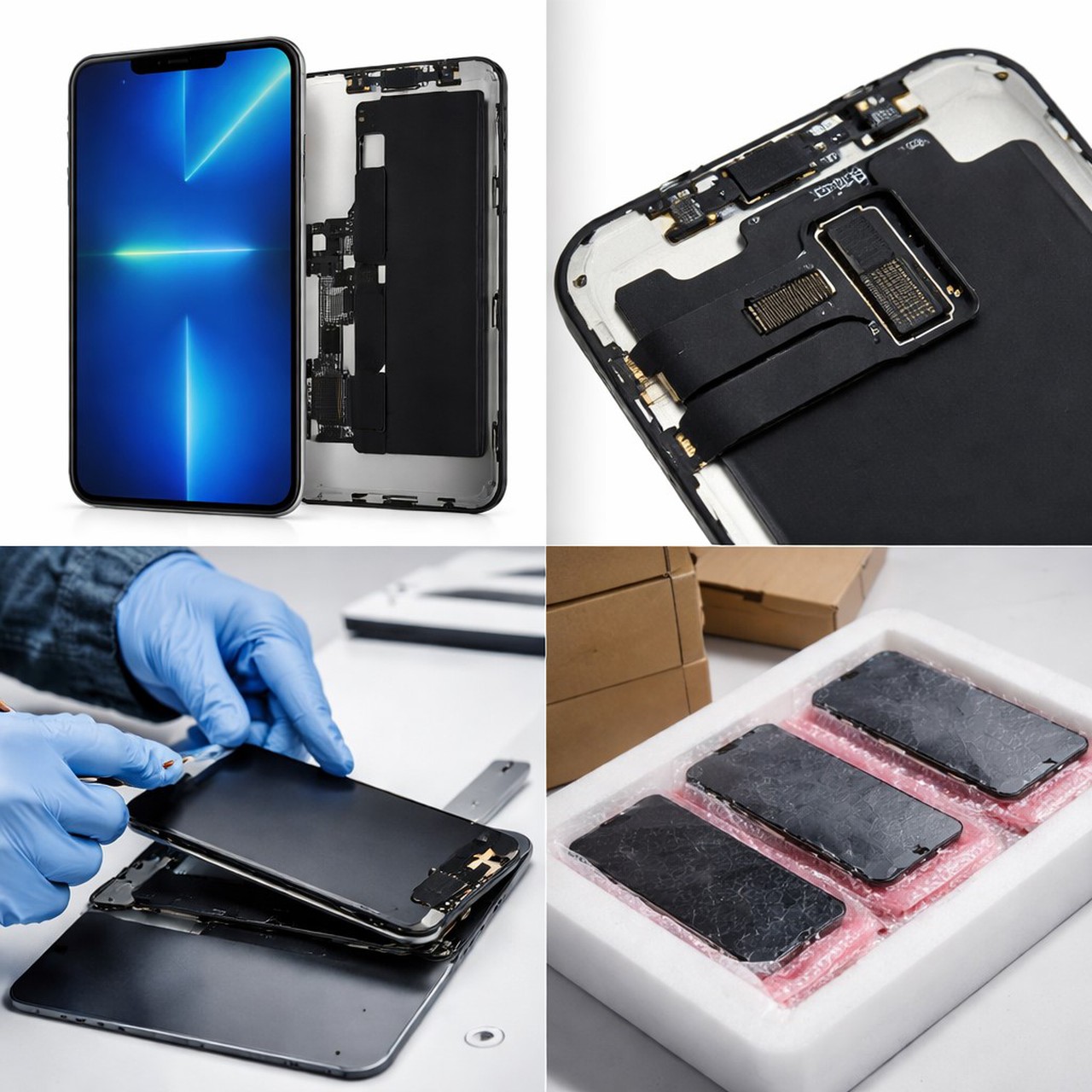
One thing many newer buyers still underestimate is how much hidden component quality matters.
Most customers only see the display panel.
But experienced wholesalers pay attention to completely different things:
- touch IC quality
- flex cable durability
- connector precision
- backlight stability
- lamination consistency
Two iPhone screens may look almost identical externally while behaving very differently after a few weeks of real usage.
This is especially common in the aftermarket OLED market right now.
A lot of factories today are competing aggressively on price.
That pressure has changed the industry quite a bit.
To reduce costs, some manufacturers quietly lower quality in areas customers cannot immediately notice during short testing.
For example:
- lower-grade touch IC chips
- weaker flex cable materials
- simplified shielding layers
- less stable voltage management
- lower QC sampling rates
Initially, the screen may perform perfectly well.
But once the phone experiences:
- repeated charging
- gaming heat
- outdoor brightness usage
- pocket pressure
small weaknesses begin appearing.
That's why many problems today show up gradually instead of immediately.
Interestingly, some repair shops are becoming more careful about extremely cheap OLED screens.
A few years ago, OLED upgrades became very popular because customers liked:
- deeper blacks
- stronger contrast
- thinner display structure
And from a marketing perspective, "OLED" sounds more premium than LCD.
But after dealing with large numbers of warranty returns, some repair businesses are starting to rethink things.
Not because OLED technology is bad.
The issue is that low-cost aftermarket OLED quality varies too much between factories.
Some cheap OLED screens look fantastic during installation but become unstable under heat.
Especially during:
- gaming
- fast charging
- long navigation usage
- maximum brightness settings
Problems like these have become increasingly common:
- flickering at low brightness
- green tint
- ghost touch
- delayed response
- unstable dimming
That's one reason some experienced repair shops still prefer stable LCD replacements for certain customers.
Especially customers who care more about reliability than display perfection.
Another major issue in the current market is inconsistent batch quality.
This is becoming a serious headache for many wholesalers.
Some suppliers provide excellent samples.
The first shipment looks great.
Then later production batches suddenly change:
- touch becomes less responsive
- brightness calibration shifts
- frame fitting becomes inconsistent
- connector quality changes
The screen model name stays the same, but internally the materials may already be different.
This happens more often than many buyers realize.
Especially in highly price-competitive factories where production materials frequently change.
People outside the industry often think mobile phone screens are standardized products.
Actually, the aftermarket display business is far more complicated than that.
Even screens using similar LCD panels may still behave very differently depending on:
- touch IC supplier
- backlight quality
- flex cable material
- bonding precision
- QC standards
That's why experienced buyers rarely judge a supplier from one sample alone.
Most serious wholesalers test:
- multiple production batches
- long-term installations
- heat behavior
- touch consistency
- return rates over time
before building stable supplier relationships.
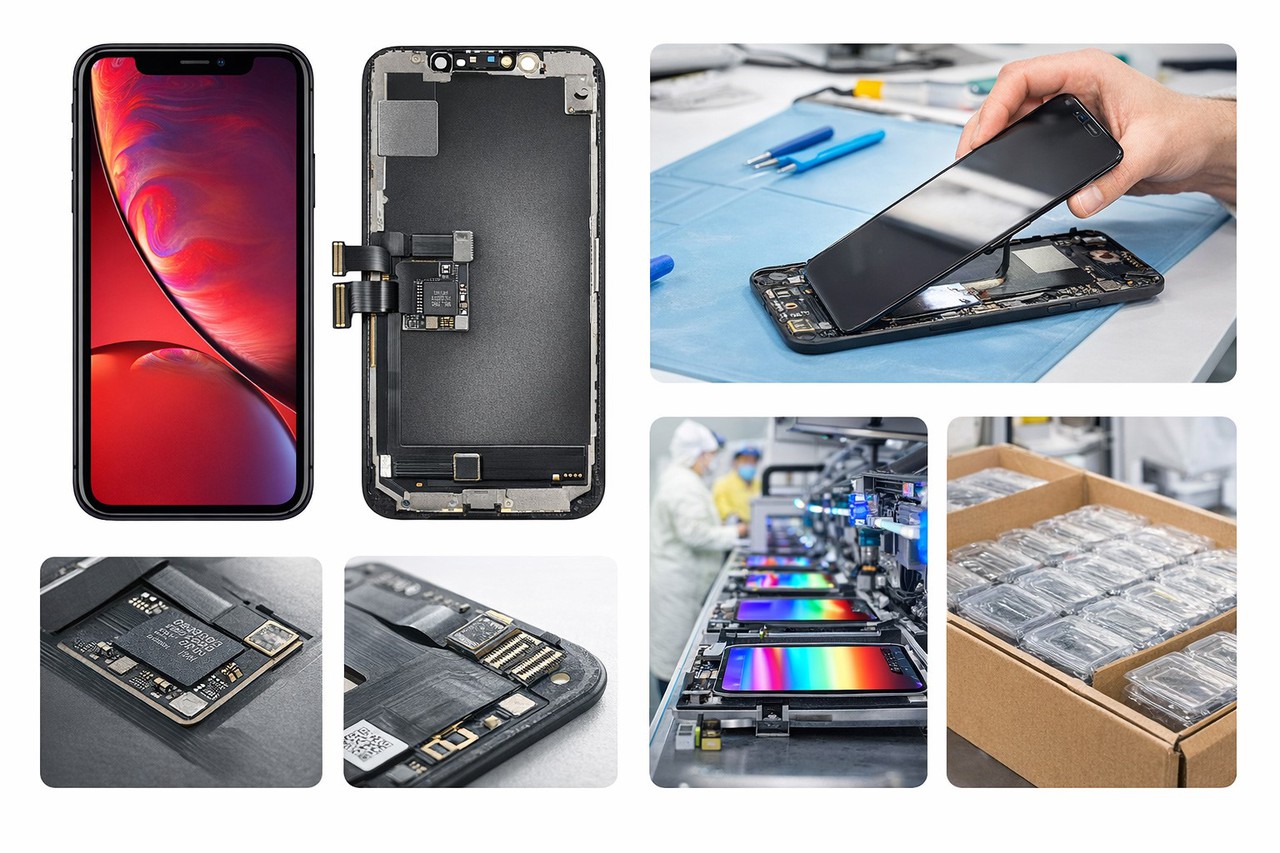
One thing that has become very obvious recently is that more repair businesses now care about operational stability more than ultra-low pricing.
Because once a shop grows large enough, return repairs become extremely expensive.
Not just because of replacement cost.
But because of:
- labor time
- customer complaints
- negative reviews
- damaged reputation
- repeat repair risk
Especially today, where Google reviews and social media affect local repair businesses so heavily.
Many repair shops would rather make slightly less profit per repair if it means fewer customers returning with problems later.
Interestingly, many long-term suppliers in Shenzhen are also changing their strategy.
The factories keeping stable long-term clients are often not the factories offering the absolute cheapest prices.
Instead, they usually focus more on:
- stable production
- consistent quality control
- lower defect rates
- predictable batch performance
Because serious buyers eventually care more about stability than temporary pricing advantages.
And honestly, that trend is becoming much more obvious across the industry now.
Another thing experienced buyers have stopped paying too much attention to is marketing language.
Terms like:
- OEM quality
- original quality
- premium OLED
- factory grade
are everywhere now.
Most buyers in the industry have heard these phrases thousands of times already.
What experienced repair businesses actually care about today is much simpler:
- Does the touch remain stable after weeks of use?
- Will brightness stay consistent?
- Does the screen handle heat properly?
- Are batches consistent over time?
- Is the return rate manageable?
Because those things directly affect long-term business.
The mobile phone LCD and OLED market has become far more competitive over the past few years.
But at the same time, the industry is also becoming more mature.
A lot of serious repair shops and wholesalers are no longer chasing the absolute lowest price anymore.
Instead, they are gradually prioritizing:
- stable suppliers
- reliable screen quality
- lower warranty risk
- long-term cooperation
- consistent production standards
Because after enough experience in this business, most people eventually realize something:
The real cost of a screen is usually not the purchase price.
It's the problems that appear later.